
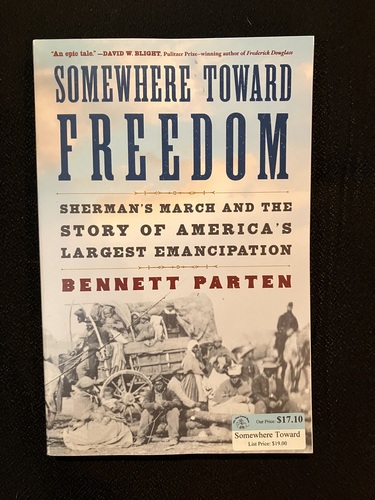
Considered one of ΓÇ£the most innovative studies of American emancipation in the Civil WarΓÇ¥ (David W. Blight,Pulitzer PrizeΓÇôwinning author of Frederick Douglass)Somewhere Toward Freedom is a groundbreaking account of ShermanΓÇÖs March to the SeaΓÇöthe critical Civil War campaign that destroyed the ConfederacyΓÇötold for the first time from the perspective of the enslaved people who transformed it into the biggest liberation event in American history. In the fall of 1864General William Tecumseh Sherman led his army through AtlantaGeorgiaburning buildings of military significanceΓÇöand ultimately most of the cityΓÇöalong the way. From Atlantathey marched across the state to the most important city at the time: Savannah. Mired in the deep of the South with no reliable supply linesShermanΓÇÖs army had to live off the land and the provisions on the plantations they seized along the way. As the army marched to the eastplantation owners fledbut even before they did soslaves self-emancipated to Union lines. By the time the army seized Savannah in Decemberas many as 20000 enslaved people had attached themselves to ShermanΓÇÖs army. They endured hardshipsmarching as much as twenty miles a dayΓÇöoften without food or shelter from the winter weatherΓÇöand at times Union commanders discouraged and even prevented the self-emancipated from staying with the army. Racism was not confined to the Confederacy. In Somewhere Toward Freedomhistorian Bennett Parten brilliantly reframes this seminal episode in Civil War history. He not only helps us understand how ShermanΓÇÖs March impacted the warand what it meant to the enslavedbut also reveals how it laid the foundation for the fledging efforts of Reconstruction. When the war endedSherman and various government and private aid agencies seized plantation landsΓÇöparticularly in the sea islands off the Georgia and South Carolina coastsΓÇöin order to resettle the newly emancipated. They were fedhousedand in some instancestaught to read and write. This first real effort at Reconstruction was short-livedhowever. As federal troops withdrew to the northConfederate sympathizers and Southern landowners eventually brought about the downfall of this program. ShermanΓÇÖs march has remained controversial to this day. But as Parten revealsit played a significant role in ending the Civil Wardue in no small part to the efforts of the tens of thousands of enslaved people who became a part of it. In Somewhere Toward Freedomthis critical moment in American history has finally been given the attention it deserves.