
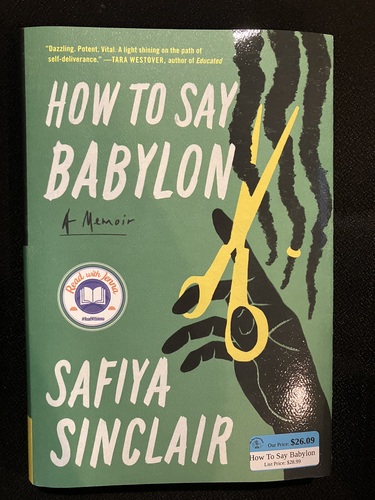
With echoes of Educated and Born a Crime,How to Say Babylon is the stunning story of the authorΓÇÖs struggle to break free of her rigid Rastafarian upbringingruled by her fatherΓÇÖs strict patriarchal views and repressive control of her childhoodto find her own voice as a woman and poet. Throughout her childhoodSafiya SinclairΓÇÖs fathera volatile reggae musician and militant adherent to a strict sect of Rastafaribecame obsessed with her purityin particularwith the threat of what Rastas call Babylonthe immoral and corrupting influences of the Western world outside their home. He worried that womanhood would make Safiya and her sisters morally weak and impureand believed a womanΓÇÖs highest virtue was her obedience. In an effort to keep Babylon outside the gatehe forbade almost everything. In place of pantsthe women in her family were made to wear long skirts and dresses to cover their arms and legshead wraps to cover their hairno make-upno jewelryno opinionsno friends. SafiyaΓÇÖs motherwhile loyal to her fathernonetheless gave Safiya and her siblings the gift of booksincluding poetryto which Safiya latched on for dear life. And as Safiya watched her mother struggle voicelessly for years under housework and the rigidity of her fatherΓÇÖs beliefsshe increasingly used her education as a sharp tool with which to find her voice and break free. Inevitablywith her rebellion comes clashes with her fatherwhose rage and paranoia explodes in increasing violence. As SafiyaΓÇÖs voice growslyrically and poeticallya collision course is set between them. How to Say Babylon is SinclairΓÇÖs reckoning with the culture that initially nourished but ultimately sought to silence her; it is her reckoning with patriarchy and traditionand the legacy of colonialism in Jamaica. Rich in lyricism and language only a poet could evokeHow to Say Babylon is both a universal story of a woman finding her own power and a unique glimpse into a rarefied world we may know how to nameRastafaribut one we know little about.